Phosphates Come Home: What OCP's $450 Million Louisiana Bet Means for US Food Security and Moroccan Industrial Strategy

AN EXCLUSIVE INTERVIEW WITH:

For the first time in more than four decades, the United States is set to build a new phosphate fertilizer plant. And it is Morocco that is making it happen.

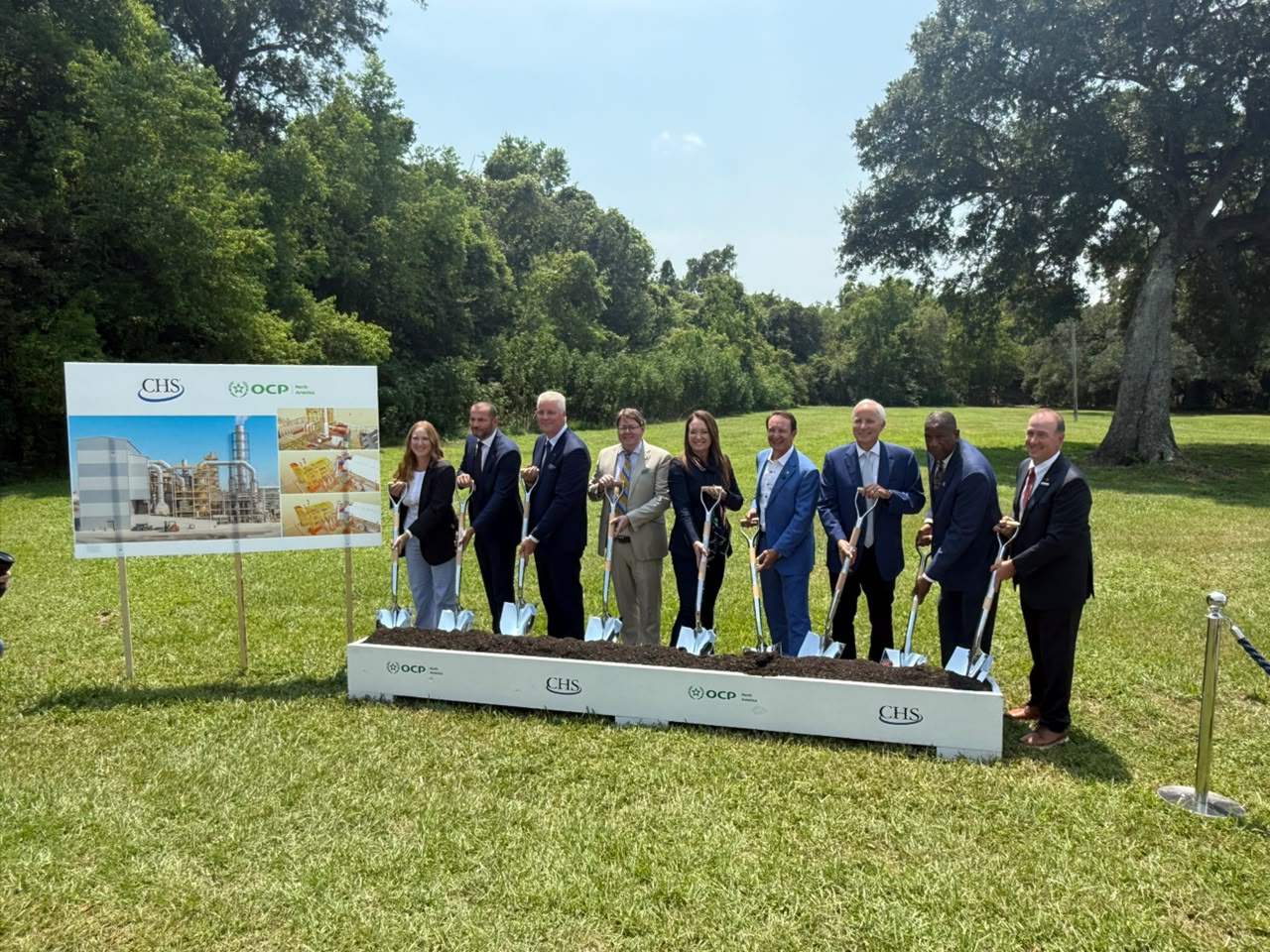
OCP North America, a subsidiary of Morocco's OCP Group, and CHS Inc., the largest farmer-owned cooperative in the United States, have announced a joint venture to construct and operate a phosphate fertilizer production facility in Louisiana. With an investment of up to $450 million, the project will be the first plant of its kind built on American soil since 1984.

The Deal at a Glance

The facility will rise inside Cornerstone Energy Park, an 800-acre industrial site in Waggaman, Louisiana, selected for its existing industrial infrastructure, utility access, and multimodal logistics connectivity. Once operational, the plant is expected to produce more than 1 million tons of phosphate fertilizer per year.

The structure of the partnership plays to each company's strengths. OCP Group, which controls the world's largest phosphate reserves, will supply phosphoric acid from its global operations. CHS brings its established distribution network, moving finished products to American farmers, cooperatives, and distributors across the agricultural heartland.

The partners have also submitted an application for potential funding under the USDA's FIELDS program (Fertilizer Investment and Expansion for Long-term Domestic Supply), aligning the project with Washington's stated priority of expanding domestic fertilizer production. The venture remains subject to regulatory and financing approvals.

Why This Matters for American Agriculture

The numbers behind US phosphate supply tell a story of structural dependence. The United States currently imports roughly 40% of the phosphate-based fertilizers its farmers require, while domestic extraction has fallen by more than 50% since 1995. For a nation that positions food security as a strategic priority, that gap has become increasingly difficult to ignore.

Jay Debertin, President and CEO of CHS, called the announcement "a particularly important moment for American agriculture," noting that the cooperative's farmer-owned structure means the investment brings fertilizer production physically closer to the growers who depend on it.

Kevin Kimm, CEO of OCP North America, described the venture as "a major step" in the company's commitment to American agriculture, with the goal of building durable infrastructure that strengthens US food security through fertilization solutions produced in the United States.

The Bigger Picture: From Exporter to Embedded Partner

For members of The Net-Zero Circle, the significance of this deal extends well beyond a single plant.

The announcement caps a rapid sequence of developments. In late June, the US administration temporarily suspended the countervailing duties that had restricted Moroccan phosphate fertilizer imports for more than five years. By mid-August, the Port of New Orleans had received its first OCP cargo in years, roughly 54,000 tons of Triple Super Phosphate, arriving ahead of the fall planting season. Less than two weeks later, OCP moved from shipping product to building production capacity inside the American market itself.

That progression signals a deliberate strategic evolution. OCP is no longer content to be the world's dominant phosphate exporter. It is embedding its industrial base directly within the major agricultural markets it serves, a model it has already begun deploying across Africa, South America, and Asia.

It also reflects the commercial repositioning underway within OCP's product portfolio. Triple Super Phosphate now accounts for 65% of the group's sales, up from 30% before the sulfur crisis, as farmers increasingly seek products that deliver phosphorus independently of nitrogen and potassium for more flexible application.

The Investment Signal

For investors tracking North Africa's industrial champions, the Louisiana venture reinforces a pattern The Net-Zero Circle has followed closely: OCP pairing its resource advantage with downstream infrastructure, decarbonization commitments, and strategic market access. The group has pledged to run on 100% renewable power by 2027 and reach carbon neutrality by 2040, positioning its fertilizer production among the lowest-carbon options available at scale.

A Moroccan state-backed enterprise building critical agricultural infrastructure in the United States, backed by a $35.5 billion revenue American cooperative and potentially supported by USDA funding, would have seemed improbable only two years ago. Today it reflects the new geometry of food security partnerships, where resource-holding nations in the Global South are no longer just suppliers but co-owners of the value chain.

Morocco holds the resources. The United States holds the demand. Louisiana is where the two now meet.

RELATED POSTS

August 27, 2026

Phosphates Come Home: What OCP's $450 Million Louisiana Bet Means for US Food Security and Moroccan Industrial Strategy

27 August 2026, London (The Net-Zero Circle by IN-VR) — Morocco's OCP Group and CHS Inc., the largest farmer-owned cooperative in the US, have announced a joint venture to build a $450 million phosphate fertilizer plant in Louisiana, the first facility of its kind constructed in the United States since 1984. With a capacity of over 1 million tons per year, the project aims to cut US reliance on imports, which currently cover roughly 40% of the nation's phosphate fertilizer needs.
August 27, 2026
Article

Argentina’s RIGI Unlocks Critical-Minerals Investment

Argentina’s RIGI framework is making large-scale critical-minerals projects more investable and predictable. Copper now represents the largest share of approved mining investment, while lithium remains a major growth opportunity. The wider opportunity includes energy, infrastructure, processing, technology, finance, logistics and other services.
June 18, 2026
Article

From Mendoza to TMX: How a Copper Listing Validates an Institutional Model for the Andean Corridor

Argentina Metals Corp's debut on the TSX Venture Exchange (TSXV: VLLC) is the first time an Andean junior mining company has completed the institutional journey from a Mendoza copper project to public markets in Toronto. The listing is the first proof point of the model The Andean Bridge has now been formalised to scale across Argentina, Chile, Peru and Bolivia.