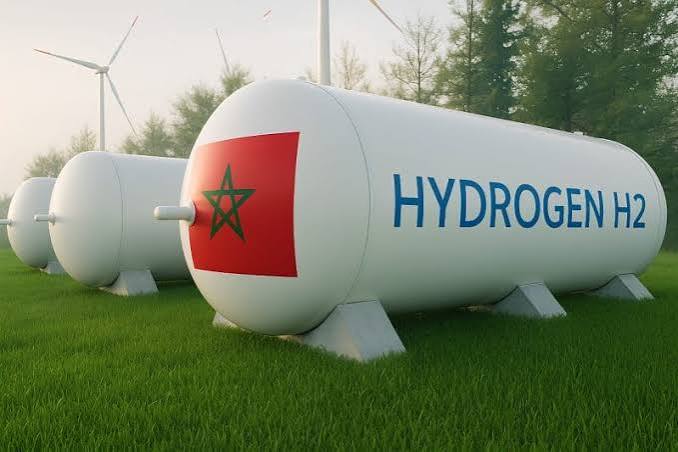
6 min
•
Ibtissam El Assad

Upper Austria Turns to Morocco as Europe’s Industrial Heartland Searches for Green Hydrogen

AN EXCLUSIVE INTERVIEW WITH:

A New Chapter in Europe’s Search for Clean Molecules

As European industry looks for ways to decarbonise processes that electricity alone cannot reach, a growing number of regional governments are looking south, and Morocco is increasingly where that search leads.

This was the backdrop for a recent visit by a delegation from Upper Austria, led by Markus Achleitner, the region’s councillor for the economy, and Günther Steinkellner, its councillor for infrastructure. The mission, first reported by Austrian public broadcaster ORF, set out to examine whether Moroccan green hydrogen could one day help power one of Central Europe’s most industrialised regions.

The visit came with a clear purpose. Upper Austria is the most energy-intensive federal state in Austria, and Achleitner said hydrogen plays a key role for the region’s industry. For a manufacturing base of this size, securing long-term access to clean hydrogen is becoming part of its industrial strategy.

Morocco’s Hydrogen Ambitions Are Taking Concrete Form

Morocco has spent years positioning itself as a future exporter of green energy, and its hydrogen strategy is now moving from vision to project pipeline. The Kingdom aims to expand its renewable sector further and begin exporting green hydrogen from 2030.

The main tool for getting there is the “Offre Maroc Hydrogène Vert,” the national framework designed to attract investors and structure how projects move forward. According to Mourad Hajjaji, general manager of Morocco’s Green H2 Cluster, seven projects have now reached a new stage of the process, allowing their developers to keep negotiating with the government. Together, those projects plan around 15 gigawatts of renewable generation capacity.

Hajjaji also gave an indicative production cost of around $5 per kilogram of green hydrogen. The figure is based on simulations rather than an established market price. Even so, it gives European buyers an early benchmark for assessing Morocco against competing supply routes.

Tanger Med and the Question of Getting Hydrogen to Europe

One of the most significant stops on the delegation’s itinerary was Tanger Med. The port complex already handles international trade, vehicle shipments and a hydrocarbons terminal, which makes it a natural candidate to support energy transport in the future.

Producing hydrogen at a competitive cost is only part of the equation. Delivering it to industrial centres in Central Europe is widely recognised as the sector’s main challenge. In the short term, the industry is considering maritime shipping through ports. Pipelines are also being studied, including adapting existing natural gas pipelines to carry hydrogen.

Steinkellner put it plainly: the energy transition requires efficient infrastructure. In his view, Morocco offers an example of how energy, mobility and industry can be developed together rather than in separate silos.

An Industrial Relationship That Goes Beyond Energy

The delegation’s interest extended well beyond hydrogen. Its members also examined opportunities for cooperation in automotive, railway, machinery and environmental technology, sectors where Morocco’s industrial base has expanded considerably.

The officials also visited ATG Maroc, a Moroccan industrial company that works with Austrian manufacturer starlim sterner. Partnerships of this kind matter. They show that Austrian–Moroccan cooperation already exists on the factory floor, and they give future energy trade an industrial relationship to build on.

What This Signals for Morocco’s Place in Europe’s Energy Future

The Upper Austrian mission reflects a broader shift in how European industry approaches green hydrogen. Regions with heavy industrial demand are moving beyond strategy papers. They are visiting ports, meeting cluster leaders and assessing partners in person.

For Morocco, every visit of this kind adds weight to its case as a credible long-term supplier. Its renewable resources, a structured investment framework and established industrial partnerships with European companies give it advantages that few competing hydrogen producers can match all at once.

The questions the delegation focused on, though, are the ones that will decide the pace of progress. These include how quickly the shortlisted projects reach investment decisions, whether costs reach competitive levels, and which transport routes ultimately connect Moroccan production to European demand.

A Partnership Worth Watching

Upper Austria’s visit is not a supply agreement. It still shows a European industrial region treating Morocco as a serious option for securing the clean energy its industry will need in the coming decades.

For policymakers, investors and businesses following the energy transition across the Mediterranean, the relationship between Morocco and Europe’s energy-intensive regions is one to watch closely. As Morocco’s hydrogen projects advance and transport solutions take shape, exploratory visits like this one could become the first step towards lasting commercial partnerships.

ARTICLES CONNEXES

October 14, 2026
•
Article

Upper Austria Turns to Morocco as Europe’s Industrial Heartland Searches for Green Hydrogen

14 October 2026, Tangier (The Net-Zero Circle by IN-VR): An Upper Austrian delegation led by Markus Achleitner and Günther Steinkellner visited Tanger Med and Moroccan industrial partners to explore green hydrogen imports and industrial cooperation. Morocco has seven hydrogen projects advancing, with around 15 GW of renewable capacity planned, as it prepares to begin exports from 2030.
September 30, 2026
•
Article

Salta’s Lithium Exports Get a 240-Tonne Boost

Salta has launched its first on-site customs facility for a lithium operation at Ganfeng’s General Güemes processing plant. The system allows lithium chloride to be consolidated, inspected and cleared for export directly at the facility. Following a 240-tonne pilot shipment, the model could help improve the efficiency, traceability and scalability of Salta’s lithium export chain.
September 29, 2026
•
Article

Brazil’s New Critical Minerals Law Reshapes Investment Rules

Brazil’s new critical minerals law strengthens state oversight of strategic mineral assets while keeping the sector open to foreign investment. The policy prioritises local processing, value creation and supply-chain security, with CIMCE gaining powers to review key transactions. Its impact on investment will depend on how transparently and predictably these new powers are implemented.