Argentina’s Mining Exports Jump 74.4% in Early 2026

Phosphates Come Home: What OCP's $450 Million Louisiana Bet Means for US Food Security and Moroccan Industrial Strategy

Argentina’s mining exports reached US$4.742 billion in the first half of 2026, the highest level recorded for the first six months of a year. The figure represents a 74.4% increase compared with the same period in 2025 and confirms that mining is becoming a more important source of foreign currency for the country.
For Argentina, however, the significance of this result extends beyond the export balance. The next stage of mining growth will be determined by how effectively the country connects its resource base to infrastructure, energy, services and Pacific-facing markets across the Andes. In that sense, Argentina’s mining opportunity is also an Andean Bridge opportunity: a chance to link production in the interior with Chilean logistics, regional suppliers and global demand.
The result also shows a sector with two different engines. Gold and silver continue to provide most of Argentina’s mining income, while lithium is growing at a much faster rate. The central question for investors and policymakers is whether this export record marks a lasting change in Argentina’s mining industry or a temporary result supported by prices and a small number of large projects.
The figures were published by the Government of San Juan, citing data from the National Directorate of Mining Promotion and Economics, part of Argentina’s National Mining Secretariat. Metal-bearing minerals generated US$3.559 billion between January and June, equal to 75.1% of total mining exports.
Gold accounted for US$2.905 billion, or 61% of the sector’s exports. Silver contributed another US$562 million. Their combined performance means that Argentina’s mining economy remains strongly connected to established precious-metals operations, particularly in provinces where mining is already a major part of regional economic activity.
This existing base is important. It gives Argentina operating experience, export relationships, suppliers and a source of current revenue while newer lithium and copper projects move through development and approval stages.
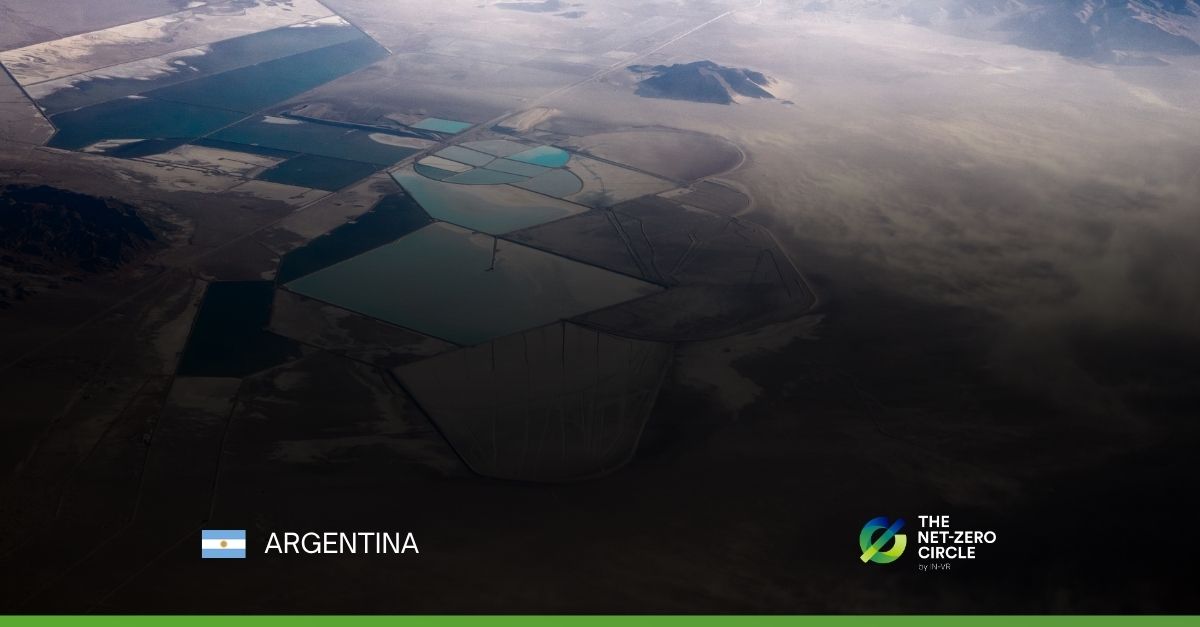
Lithium exports reached US$1.096 billion in the first half of 2026, an increase of 185% from the same period of 2025. Lithium represented 23.1% of Argentina’s mining exports during the period.
The production data points in the same direction. Argentina’s national mining production index rose 8.4% in the first half of 2026, according to INDEC data reported by Infobae. In June, the index increased 11.4% year on year. Production of lithium carbonate rose 49.4% in the first six months, with INDEC linking the increase to higher use of installed capacity and the progress of new operations.
Lithium is therefore becoming more than a resource story. It is now contributing to export earnings and increasing production. That change is likely to attract further investment in processing, transport, power, water management and mining services.
The export result should be read carefully. Mining revenues depend on both the quantity sold and the price received. A strong commodity market can increase export values even when physical production changes only modestly.
In Argentina’s case, the first-half result also included higher lithium output and increased use of existing capacity. That makes the performance more significant than a simple price effect, although it does not remove the sector’s exposure to future changes in lithium, gold and silver prices.
For investors, the next question is whether companies can continue increasing production while controlling costs. For the government, the challenge is to convert export growth into wider economic benefits through local suppliers, infrastructure, skills and regional development.
Argentina’s Large Investment Incentive Regime, known as RIGI, is designed to attract large-scale investment in strategic sectors, including mining. The framework offers qualifying projects fiscal and regulatory benefits intended to improve long-term investment conditions.
The impact of RIGI will not be measured only by the value of projects announced or submitted. Its real test will be whether projects reach financial close, construction, commissioning and commercial production.
That test is especially important for copper. Lithium is already contributing to current export growth, but large copper projects could eventually change the size of Argentina’s mining industry. Reaching that point will require roads, power, water, skilled labour and reliable routes to export markets.
The first-half export record gives Argentina a stronger platform for the next phase of mining development. The country has a functioning precious-metals base, growing lithium production and a pipeline of copper and lithium projects seeking investment.
However, the sector remains exposed to commodity prices, infrastructure gaps, regulatory execution and community expectations. Mining exports can grow quickly, but long-term competitiveness requires more than favourable geology.
Argentina’s immediate priority should be to turn export momentum into durable capacity. If it can support responsible production, improve infrastructure and move approved projects into construction, mining could become one of the country’s most important sources of foreign currency and industrial investment. The US$4.742 billion result is a strong signal, but the next milestones will determine whether it becomes a structural shift.