5 min
•
Ibtissam El Assad

Sahamco Unveils US$25 Billion Green Hydrogen and Ammonia Project in Dakhla

AN EXCLUSIVE INTERVIEW WITH:

An export-oriented project

Dakhla's coastal location gives the project access to export routes, allowing it to supply international buyers and commodity traders. This is central to its business case. Ammonia is easier to store and ship than hydrogen, and can be used as a fertiliser feedstock or a low-carbon fuel, or converted back into hydrogen at its destination.

The project is expected to strengthen Morocco's position in the global green hydrogen market and support its goals for low-carbon fuels and renewable hydrogen. Low-carbon fuels are energy sources with significantly lower net lifecycle carbon dioxide emissions than conventional fossil fuels.

Building on Morocco's renewable ambitions

Morocco aims to generate 52% of its total installed power capacity from renewable sources by 2030, split between 20% solar, 20% wind and 12% hydropower.

The country currently has around 5.5 GW of renewable capacity, while coal and hydrocarbons still account for a significant share of daily generation. Around 10 GW of new capacity is planned by 2030, comprising 4,560 MW of solar, 4,200 MW of wind and 1,330 MW of hydropower.

The Sahamco project would complement these efforts by linking renewable generation to the production of green hydrogen and ammonia for both domestic and international markets.

A growing pipeline

The announcement adds to a series of green hydrogen developments in Morocco, where other developers, including Moeve and Acciona, have also secured land for projects. Together, they reflect the Kingdom's ambition to turn its wind and solar resources into an export industry, rather than relying on electricity generation alone.

What comes next

The headline figure is significant, but the project remains at an early stage. Pre-FEED studies are only the first step in the engineering process. Before construction can begin, Sahamco will need to complete detailed design, secure financing and sign offtake agreements with buyers, ahead of a final investment decision.

Producing one million tonnes of ammonia a year would also require a substantial dedicated renewable build-out, alongside water, storage and port infrastructure. How quickly these elements come together will determine whether Dakhla becomes one of North Africa's first large-scale green ammonia export hubs.

For now, the announcement offers a further signal of international investor interest in Morocco's green hydrogen sector, and of Dakhla's emerging role within it.

‍

ARTICLES CONNEXES

November 12, 2026
•
Article

Sahamco Unveils US$25 Billion Green Hydrogen and Ammonia Project in Dakhla

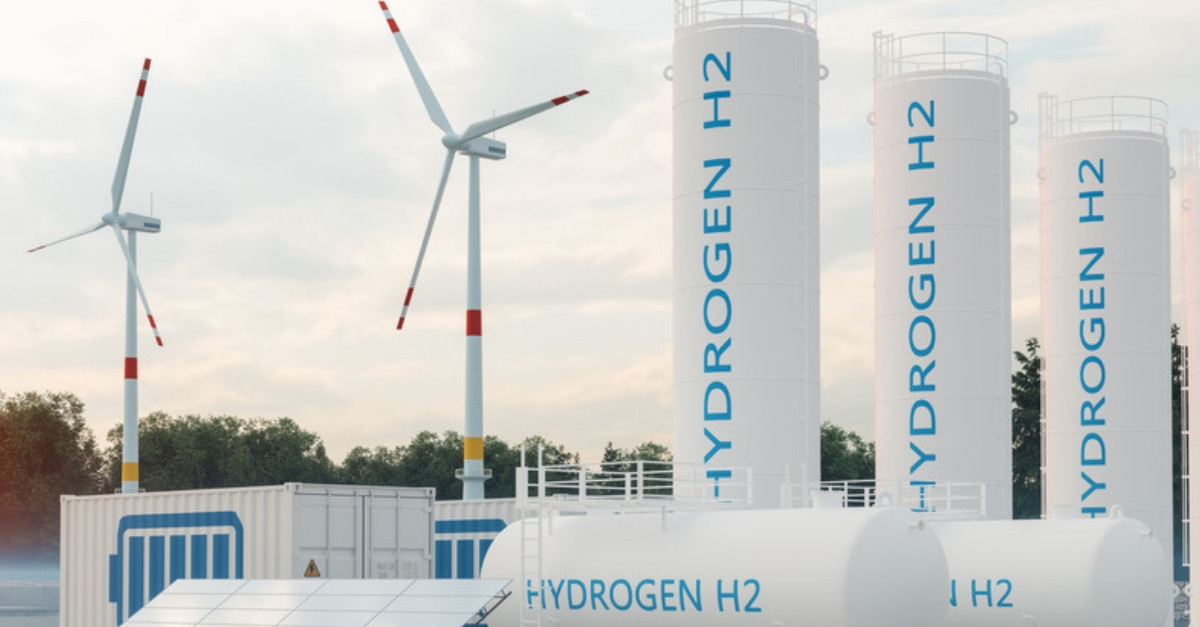
12 November 2026, London (The Net-Zero Circle) Emirati company Sahamco Holding BV has unveiled plans for a US$25 billion renewable hydrogen and ammonia project in Dakhla, in Morocco's Sahara region. It is one of the largest green molecule investments announced in the Kingdom to date. The project is designed to produce one million tonnes of renewable ammonia a year, powered by Dakhla's wind and solar resources. Sahamco says it has completed feasibility and pre-front-end engineering design (Pre-FEED) studies. Several key details, however, have not yet been made public, including the project's partners, financing structure, power capacity and construction timeline.
November 11, 2026
•
Article

Brazil Names 27 Critical and Strategic Minerals in Push to Build a Domestic Supply Chain

11 November 2026, London (The Net-Zero Circle) Brazil's critical minerals strategy is moving from principle to practice. The government has approved its first official list of critical and strategic minerals, naming 27 substances that will determine which projects can access new state financing as the country seeks to process more of its mineral wealth at home. The list gives investors a clearer picture of where Brasília intends to focus its support. How much it changes in practice, however, will depend on funding, on rules that are still being drafted and on the country's ability to attract private capital.
October 23, 2026
•
News

Brazilian Critical Minerals acquires 90% of Sais Nordeste to secure reagent supply for Ema rare earth project

22 October 2026, London (The Net-Zero Circle by IN-VR) Brazilian Critical Minerals (BCM) is moving upstream of its own mine to secure the reagent its rare earth project depends on. The ASX-listed company has signed a binding agreement, through its wholly owned subsidiary Mineração BBX do Brasil Ltda, to acquire a 90% stake in Sais Nordeste Indústria e Comércio Ltda, a magnesium sulphate producer in Feira de Santana, in the state of Bahia. Financial terms have not been disclosed. The deal reflects a wider shift in how rare earth developers outside China are approaching supply risk. Securing ore and refining capacity is no longer enough; the chemicals used to process that ore matter too. By bringing magnesium sulphate production under its own control in Brazil, BCM aims to cut its reliance on Chinese reagent supply chains and strengthen its position as an upstream supplier to the rare earth industry now being built in Western markets.