7 min
Ibtissam El Assad

Morocco and France Are Building the Energy Partnership the Mediterranean Needs

AN EXCLUSIVE INTERVIEW WITH:

The energy world is being reshaped, and Morocco is making sure it has a seat at the table.

In the latest sign of deepening bilateral ties, Morocco's Minister of Energy Transition, Leila Benali, recently sat down with a delegation from the French Senate's Commission on Territorial Planning and Sustainable Development, led by Senator Jean-Francois Longeot. The meeting was more than diplomatic courtesy. It was a signal that two of the Mediterranean's most strategically aligned nations are getting serious about building an energy future together.

A Pivotal Moment in the Clean Energy Transition

On the surface, it looks like another exchange between European and African officials. But look closer and the stakes become clear.

France is navigating a delicate balance, weaning itself off Russian energy dependence while maintaining industrial competitiveness and meeting ambitious climate targets. Morocco, meanwhile, has quietly transformed itself into one of Africa's most credible clean energy producers, with solar capacity expanding across the south and a national strategy that puts renewables at the very heart of its development model.

What brings them together is mutual need dressed up as shared vision. And in geopolitics, that's the most durable kind of partnership.

Morocco's Clean Energy Track Record Speaks for Itself

It's easy to dismiss African energy pledges as aspirational. Morocco's track record says otherwise.

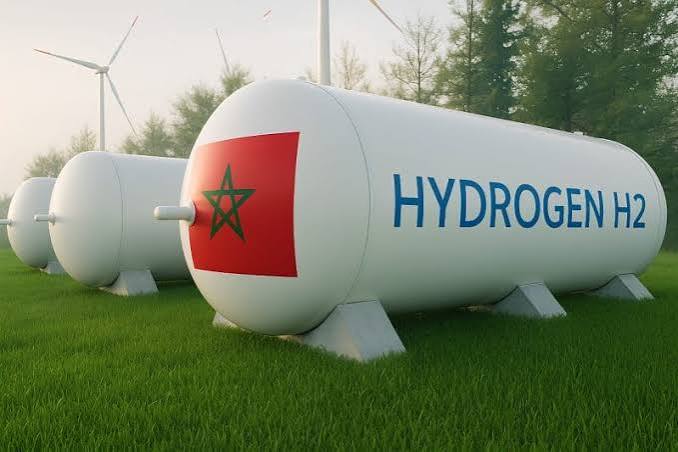
The kingdom has already set a target of five gigawatts of green electricity for industry by 2030 and has committed to exiting coal entirely by 2040, a timeline more aggressive than many European nations. Renewable energy deployment is accelerating across solar, wind, and hydroelectric sectors, and the government has made green hydrogen a strategic priority, positioning Morocco as a potential future exporter to European markets hungry for clean fuel alternatives.

This is precisely why French senators are making the trip. Morocco is no longer just a development project. It is becoming a full-fledged energy partner.

Cross-Border Clean Power: The Infrastructure That Could Change Everything

One of the central topics in the Rabat discussions was electricity interconnection, specifically the infrastructure that would allow Morocco to physically export its renewable energy surplus northward into Europe.

This isn't a new idea, but it is gaining urgency. As Europe accelerates its clean energy transition, reliable supply corridors from North Africa become strategically critical. Morocco's geographic position, sitting between the Atlantic and the Mediterranean and within cables-reach of Spain and France, makes it uniquely placed to serve as a green energy bridge between two continents.

The conversations between Benali and the French delegation suggest that both sides are moving from vision to mechanics: how to structure interconnection capacities, how to align regulatory frameworks, and how to ensure that this partnership actually translates into kilowatts delivered.

A Partnership That's Been Building for Years

This latest round of talks doesn't come out of nowhere. In 2024, Morocco and France signed a series of cooperation agreements covering energy, connectivity, and the green transition, a framework that gave institutional shape to what had been a growing but loosely coordinated partnership.

Earlier this year, Moroccan Prime Minister Aziz Akhannouch represented the kingdom at the Paris Global Nuclear Energy Summit, further cementing Morocco's presence in international energy diplomacy. President Macron has publicly described Morocco-France ties as "exceptional," language that, in diplomatic circles, carries real weight.

The relationship has history, depth, and now a concrete energy agenda.

What This Signals for the Wider Region

Morocco's energy story matters well beyond its own borders. A strong Morocco-France energy axis creates a template for how European countries can forge genuine partnerships with African nations, ones built on investment, infrastructure, and shared transition goals rather than the old extractive logic.

It also raises Morocco's profile as a regional anchor. If Rabat can become a critical node in Europe's clean energy supply chain, it gains leverage, investment flows, and long-term strategic relevance that extends well beyond the energy sector itself.

Something Significant Is Being Built

The meeting between Minister Benali and the French Senate delegation is the latest in a series of high-level exchanges that reflect a sustained commitment from both sides to deepen energy cooperation. With formal agreements already signed, participation in international summits aligned, and interconnection infrastructure on the table, the Morocco-France energy partnership is moving beyond dialogue into implementation.

For policymakers, investors, and businesses operating in the energy transition space, this bilateral relationship is one to watch closely in the months ahead.

ARTICLES CONNEXES

April 27, 2026
Article

Morocco and France Are Building the Energy Partnership the Mediterranean Needs

27 April 2026, London (The Net-Zero Circle by IN-VR)--Morocco and France are deepening their energy partnership, with talks focusing on renewable electricity, green hydrogen, and cross-border power infrastructure. Morocco has committed to a coal-free future by 2040 and is positioning itself as a key clean energy supplier to Europe. This growing alliance is setting a new standard for Africa-Europe climate cooperation.
March 23, 2026
Article

Morocco's self-generation decree: what the regulatory shift actually means

23 March 2026, London (The Net-Zero Circle by IN-VR) -- Morocco's implementing decree for Law 82-21 now allows businesses and individuals to generate renewable electricity for self-consumption and sell surplus back to the grid, opening tangible commercial opportunities for solar developers and investors across North Africa.
March 16, 2026
Article

ENGIE Doubles Down on Morocco: What a €0.5B African Bet Tells Us About the Clean Energy Transition

16 March 2026, Rabat (The Net-Zero Circle by IN-VR) — ENGIE is expanding its renewable energy and water infrastructure in Morocco, with 0.4GW of onshore wind operational and a 100,000 m³/day desalination plant under development in Dakhla. The company's AMEA division generated ~€0.5B in operating profit by end of 2025, backed by a 3.9GW regional renewables portfolio.